 AtariVideoMusic.net
The History of the Atari Video Music
From a stoned engineering lab in Sunnyvale to Daft Punk's "Robot Rock" — the complete story of the world's first commercial music visualizer.
Origins: Project Mood (1976)
In the mid-1970s, Atari, Inc. was riding the wave of its early video game success with titles like the home version of Pong, and ventured into uncharted territory with a device that promised to transform ordinary music into a visual spectacle. Developed under the codename "Project Mood", the effort was led by Robert J. Brown — the engineer behind Atari's home Pong system — with contributions from Harold Lee, who had designed the custom chip for Atari's Home Pong console in 1975.
The goal was audacious for consumer electronics of the era: a device producing real-time visuals synchronized to music using custom analog circuitry, effectively merging audio and video in a single living-room product. Notably, the Video Music shares electrical DNA with the Atari VCS (2600) — particularly in video signal generation — because Brown was concurrently working on the VCS during its development.
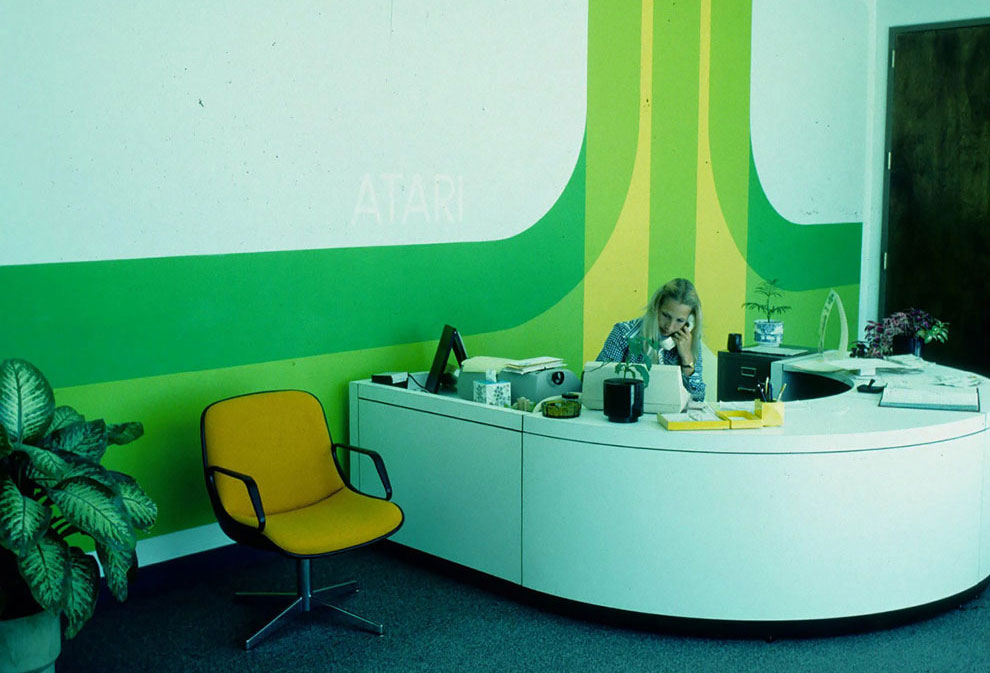
The creative environment at Atari was famously permissive, a sharp contrast to corporate contemporaries like IBM. Founder Nolan Bushnell later admitted, "Most of my engineers were stoned," reflecting a free-spirited atmosphere that encouraged bold ideas — and occasionally produced products as gloriously strange as this one.
When a Sears representative first saw the Video Music in action, he reportedly asked what the developers had been smoking when they came up with it. According to design engineer Al Alcorn, a technician stepped forward — holding a lit joint. — The most retold anecdote in Video Music history
The Company Behind It: Atari in the 1970s
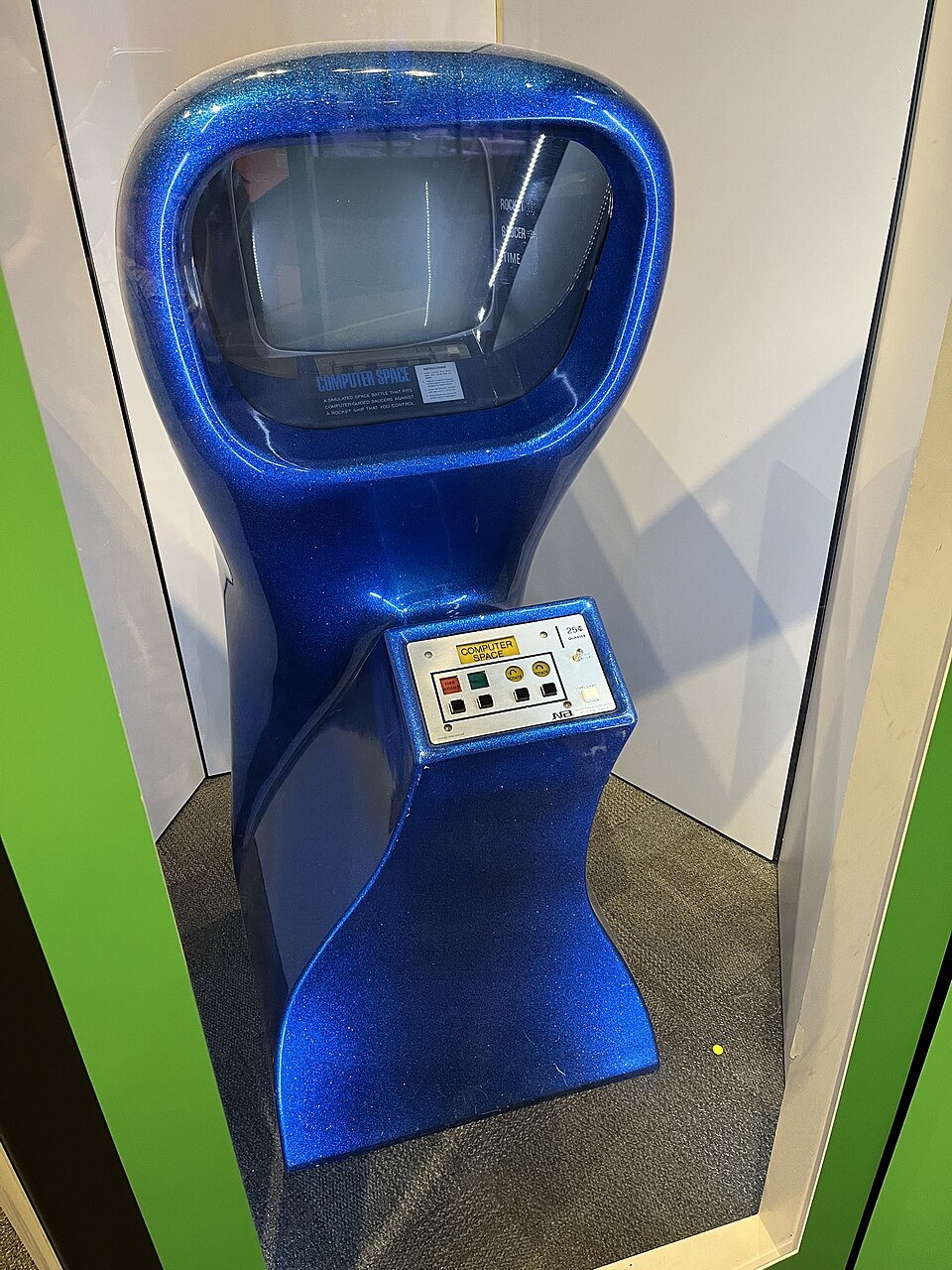
To understand why the Video Music exists, you have to understand Atari's trajectory — which starts a year before Atari itself. In 1971, Nolan Bushnell and Ted Dabney built Computer Space at Nutting Associates: the world's first commercial arcade video game. Housed in a curvy fiberglass cabinet that looked beamed in from the future, it fascinated onlookers but confused players — its controls were too complicated for a bar. Bushnell took away a founding principle: make it simple enough to play with a beer in one hand.
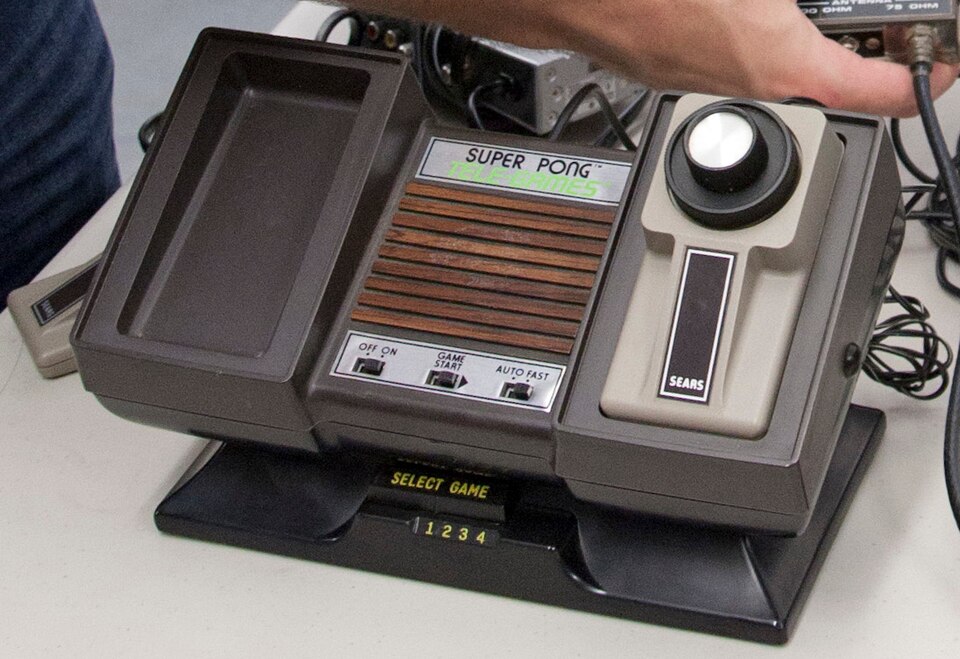
Bushnell and Dabney founded Atari, Inc. in 1972, and Al Alcorn's Pong — built as a training exercise — became an arcade phenomenon by the end of that year. In 1975, Atari brought Pong home, sold through Sears under its Tele-Games brand. It was the hit of the Christmas season, and it established both the engineering team (including Robert J. Brown and Harold Lee) and the Sears retail relationship that would carry the Video Music two years later.
1976 was Atari's pivot year: the arcade hit Breakout shipped (famously prototyped by a young Steve Jobs and Steve Wozniak), Warner Communications acquired Atari for about $28 million, and the capital from that sale funded the final push on the Atari VCS (2600), which launched in 1977 — the same year as the Video Music. Atari in this window was expansive and experimental, willing to bet that a company known for games could sell any kind of living-room electronics. The Video Music was the boldest expression of that bet.
The Machine (1977)
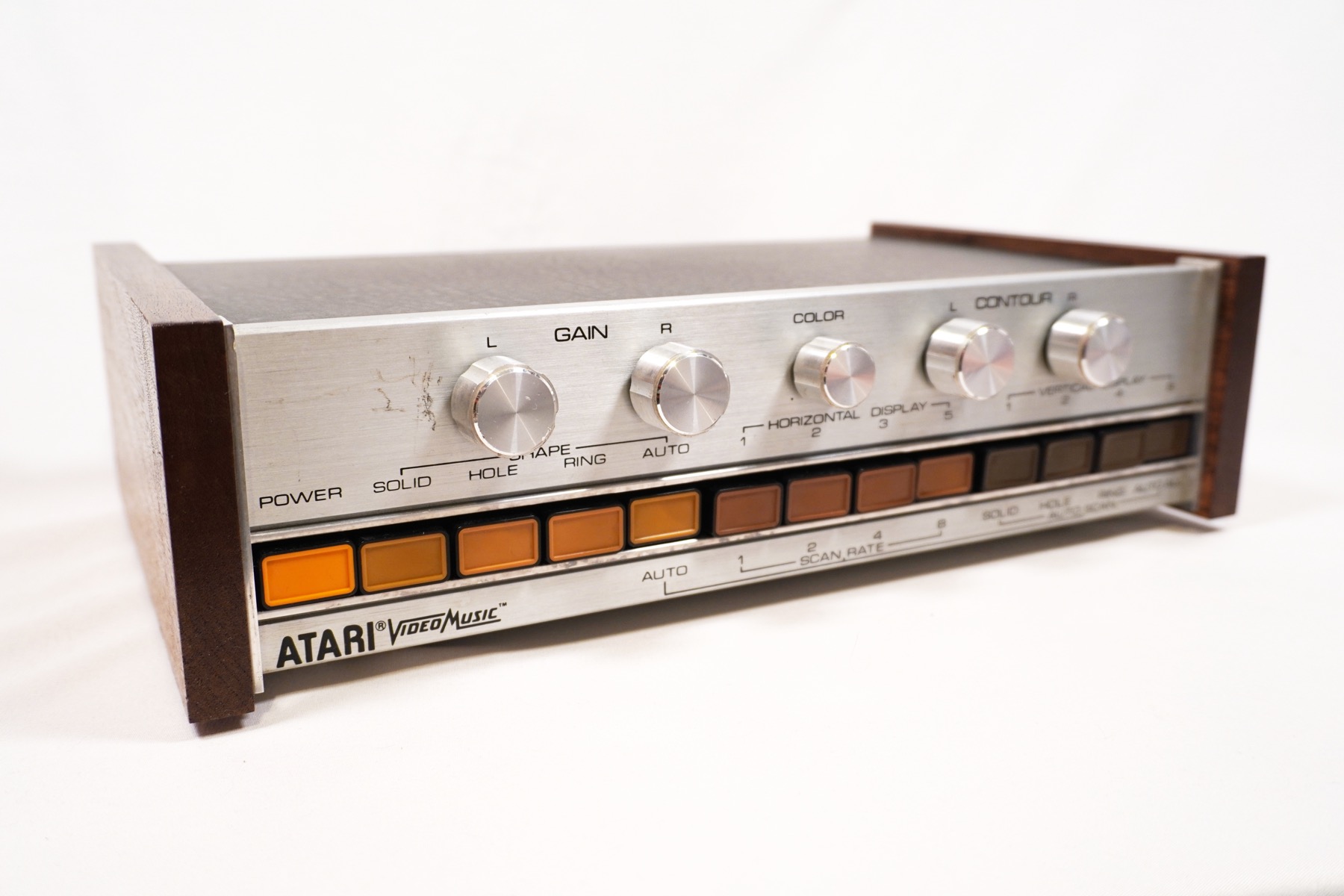
Released in 1977 at $169.95 — equivalent to about $882 in 2024 — the Video Music (Model C-240) connected to a hi-fi stereo via left and right RCA jacks and to any unmodified television through an RF switch box. Its cabinet paired a brushed metal faceplate with particle-board sides veneered in walnut: pure 1970s hi-fi styling, built to sit in a stereo rack rather than under a TV.
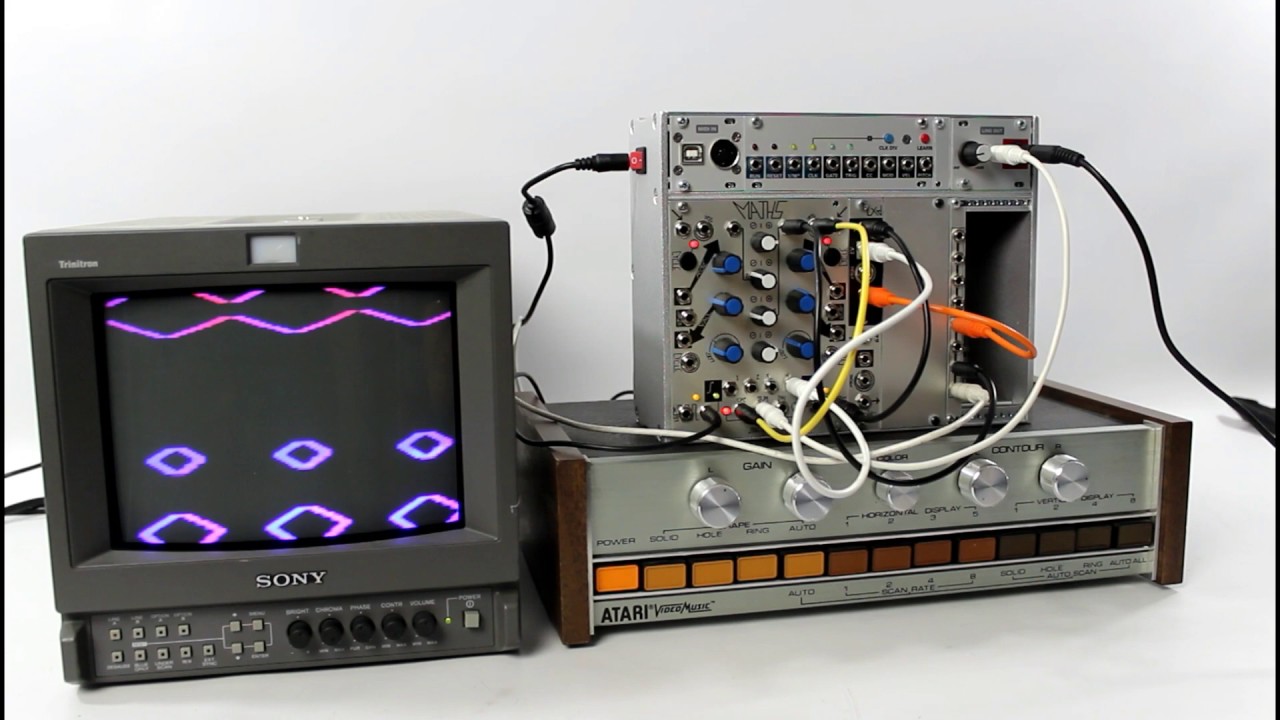
The front panel offered a power button, five potentiometer knobs — Gain L/R (pattern size), Color (solid hues through rainbow effects), and Contour L/R (soft organic shapes through sharp geometry) — and twelve push-buttons selecting solid shapes, holes, rings, auto-cycling, and arrays of up to eight horizontal or vertical repeated images.
A clever touch was the adhesive-backed switch box that glued to the TV's back panel, with a 75-ohm pass-through F connector. The antenna or cable stayed connected permanently — flip a switch to jump between broadcast TV and the visualizer's output on VHF channel 3 or 4. See the Hardware page for the full technical breakdown.
On screen, the machine painted its signature diamond visualizations — the outer diamond driven by the left audio channel and the inner by the right — pulsing with the music's intensity, morphing and shifting color as frequency content changed. Amplitude controlled pattern size and brightness; the zero-crossing rate of each channel drove its color. All of it was analog, formalized in March 1978 as U.S. Patent 4,081,829, "Audio Activated Video Display."

Launch, Reception & Discontinuation
The Video Music hit shelves in 1977 with distribution through Sears, but its commercial life was short. Despite its genuine novelty, it failed to find a mass audience, and production was discontinued after roughly one year — a commercial disappointment that ended Atari's brief detour into non-gaming audio-visual hardware.
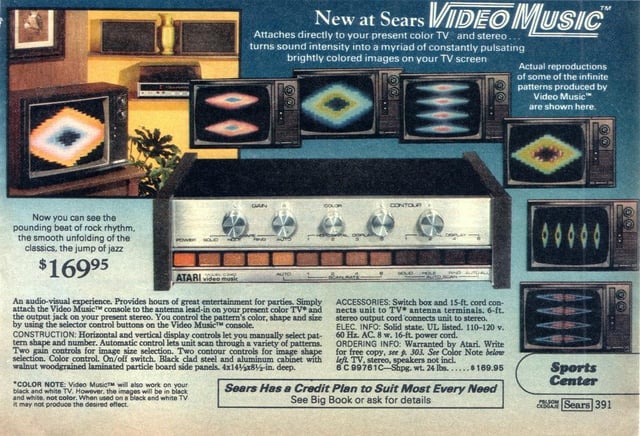
Contemporary reviews acknowledged the ingenuity while predicting the problem. In its Summer 1978 "VideoTest Report," Video magazine called it:
"A well-constructed machine and an interesting component to be used as an adjunct to stereo sound… once the novelty wears off the display can become somewhat monotonous." — Video magazine, Summer 1978
The reviewers recommended it for those who found psychedelic displays "relaxing, stimulating, or therapeutic" — positioning it as a niche accessory rather than a must-have. History has been kinder: the concept it pioneered now ships in every media player and lights every festival stage on Earth.
Pop-Culture Afterlife
The Video Music left a subtle but enduring mark, surfacing in unexpected places for decades after its discontinuation:
- Devo used its output as backgrounds in the music video for "The Day My Baby Gave Me a Surprise" — and again, fed through a vocoder, in "Beautiful World."
- Daft Punk featured a unit in their "Robot Rock" video.
- In the 1979 film Over the Edge, the character Johnny watches its diamond patterns in his bedroom.
- In The X-Files (Season 1, Episode 7, "Ghost in the Machine"), its visuals appear as part of a surveillance system.
Into the Public Domain
The Video Music's legal afterlife matters as much as its cultural one. US Patent 4,081,829 expired in 1995, seventeen years after its 1978 grant, placing the machine's patented design in the public domain. Nothing legally prevents anyone from studying, rebuilding, or cloning the circuit — which is exactly why the schematic is freely shared, why DIY recreations and homebrew visualizers exist, and why preservation sites like this one can document every detail of how it works. A machine that sold poorly in 1977 survives today partly because its design belongs to everyone.
Today, enthusiasts restore and modify surviving units — adding S-Video outputs and internal power supplies for modern setups — and the machine has become a sought-after collectible. Our Restoration Center covers how to bring one back to life.
Timeline
Before Atari exists, Nolan Bushnell and Ted Dabney create Computer Space at Nutting Associates — the world's first commercial arcade video game. Its futuristic fiberglass cabinet turns heads, but its controls prove too complex for bar patrons. The lesson — make it simple — shapes everything Atari builds next.
Computer Space cabinet, 1971. (Photo: Mbrickn, Wikimedia Commons, CC0)
Nolan Bushnell and Ted Dabney found Atari, Inc. Pong launches in arcades and becomes a phenomenon.
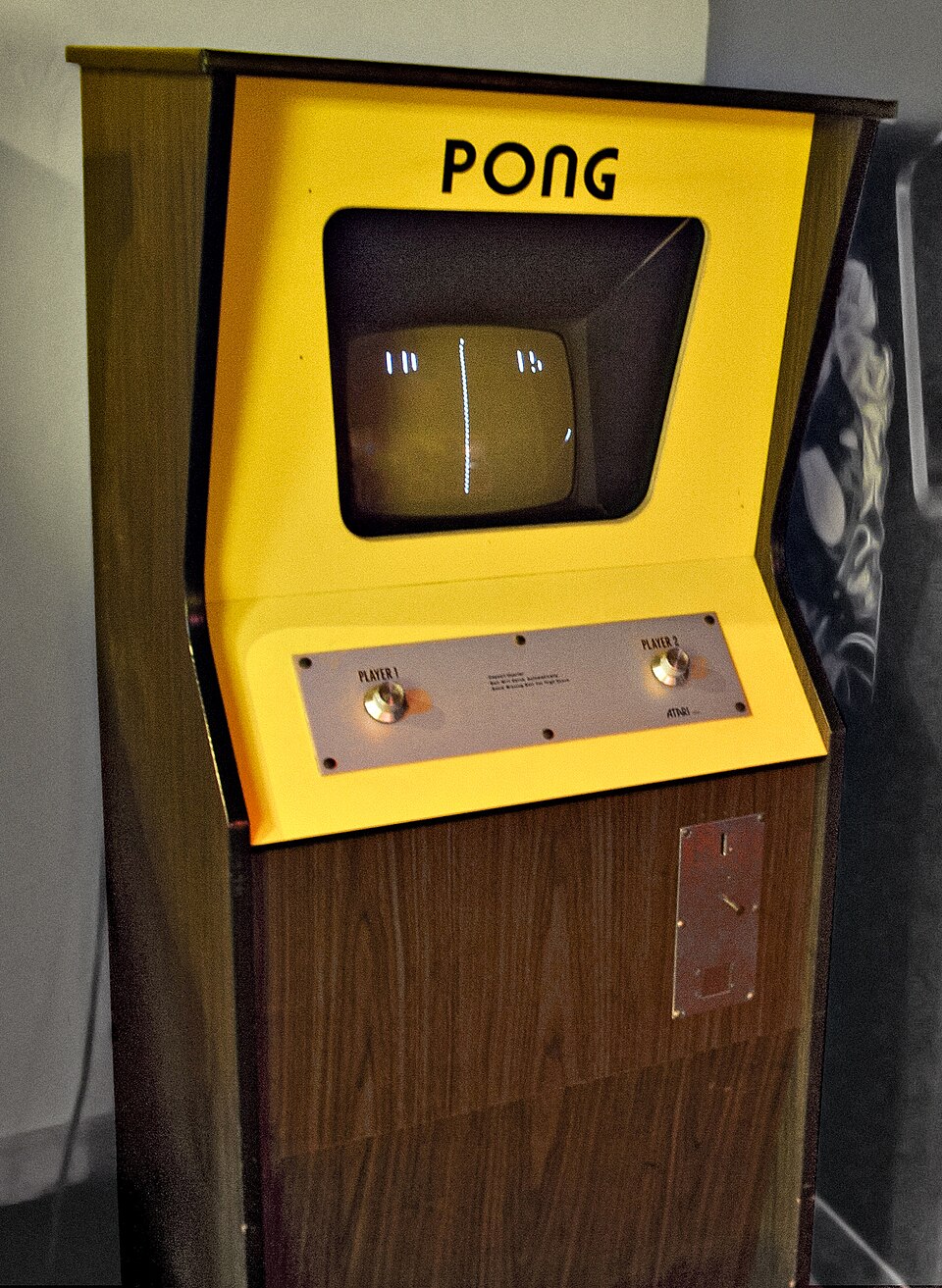
Pong arcade cabinet. (Wikimedia Commons, CC BY 2.0)
Home Pong ships through Sears under the Tele-Games brand. Robert J. Brown and Harold Lee are key engineers on the project — the team and the Sears relationship that will produce the Video Music.
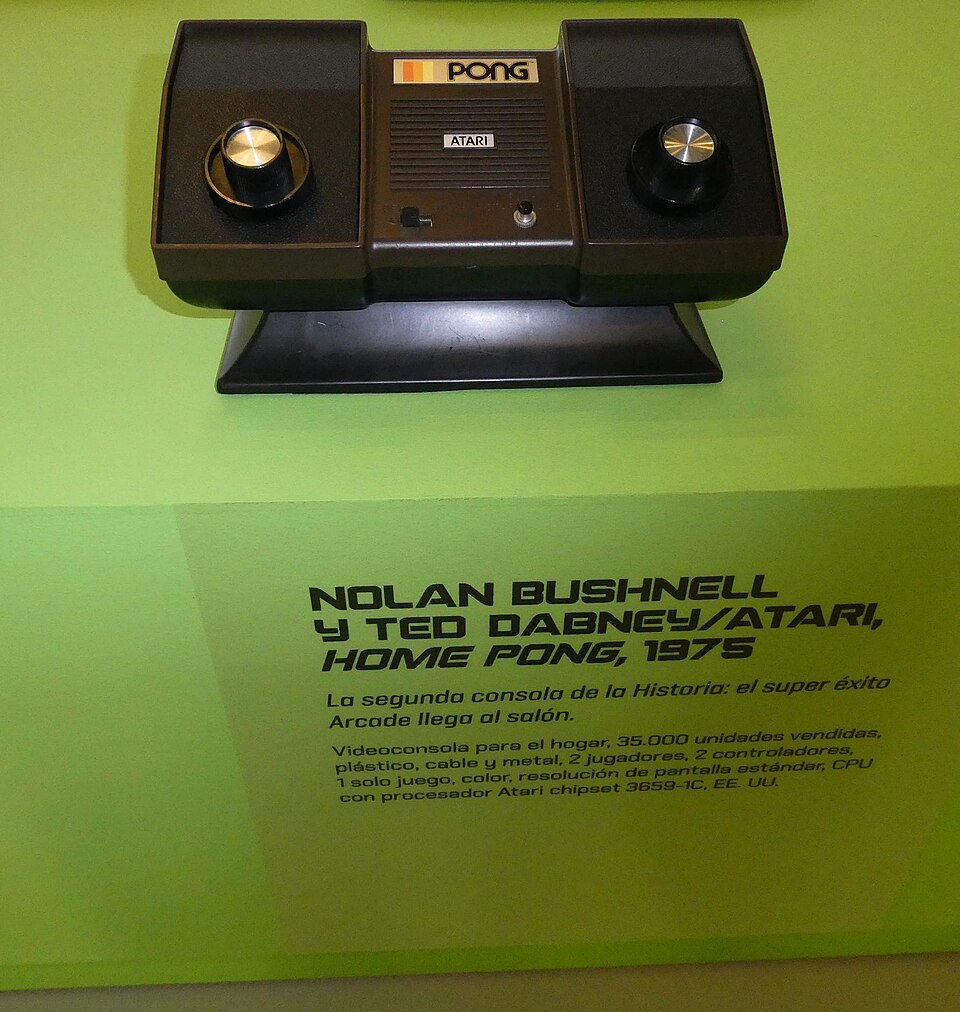
Atari Home Pong, 1975. (Photo: Jzh2074, Wikimedia Commons, CC BY-SA 4.0)
"Project Mood" begins. Brown designs an all-analog audio-to-video converter. The patent for the "Audio Activated Video Display" is filed on August 23, 1976. The same year, Warner Communications acquires Atari.
Atari headquarters, Sunnyvale, California, 1976.
The Atari Video Music C-240 launches at $169.95, sold through Sears and hi-fi retailers as "Music You Can Watch." The same year, Atari launches the VCS (2600) — sharing video-generation DNA with the Video Music.
The Atari Video Music C-240.
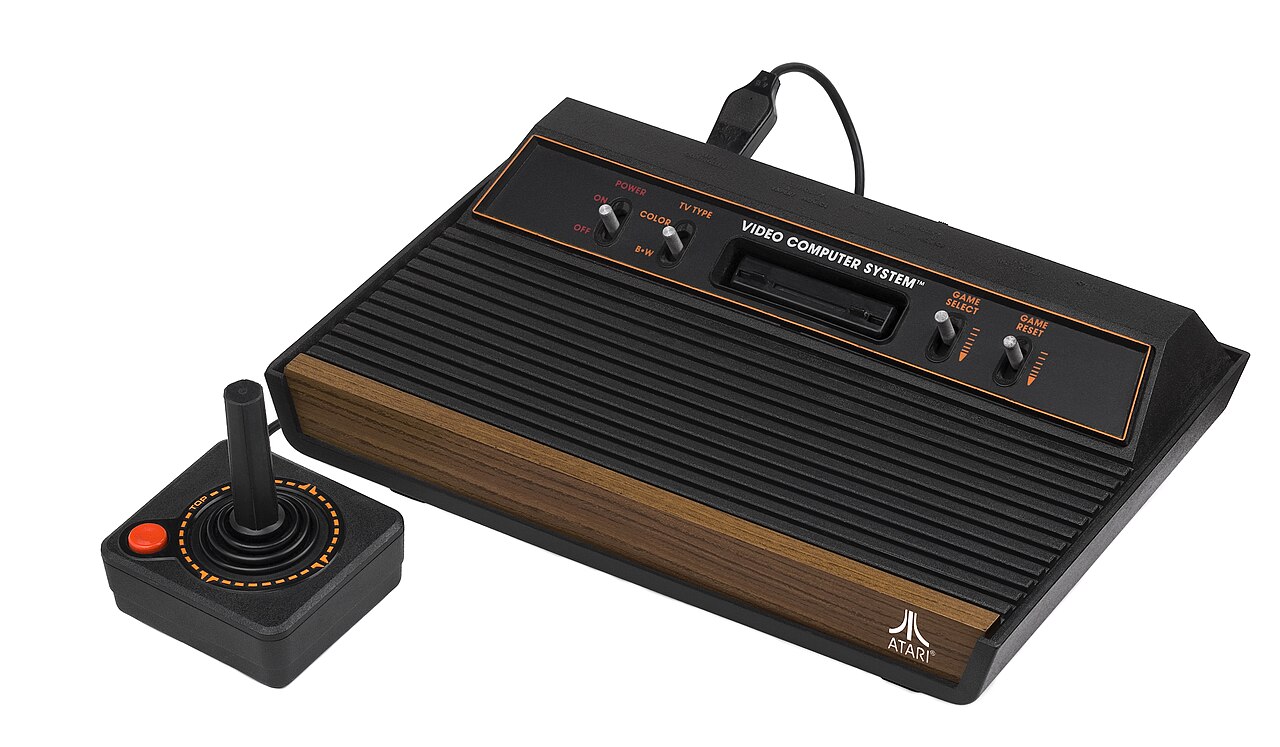
The Atari VCS (2600), launched 1977. (Photo: Evan-Amos, public domain)
US Patent 4,081,829 is granted on March 28. Video magazine publishes its lukewarm VideoTest Report. Production is discontinued after roughly a year on the market.
Sears print advertising, circa 1977–78.
Atari enters home computing with the Atari 400 and 800. The Video Music makes its film debut in Over the Edge (1979), watched by the character Johnny in his bedroom. In 1980, Atari's licensed VCS port of Space Invaders becomes the console's killer app and sends sales soaring.
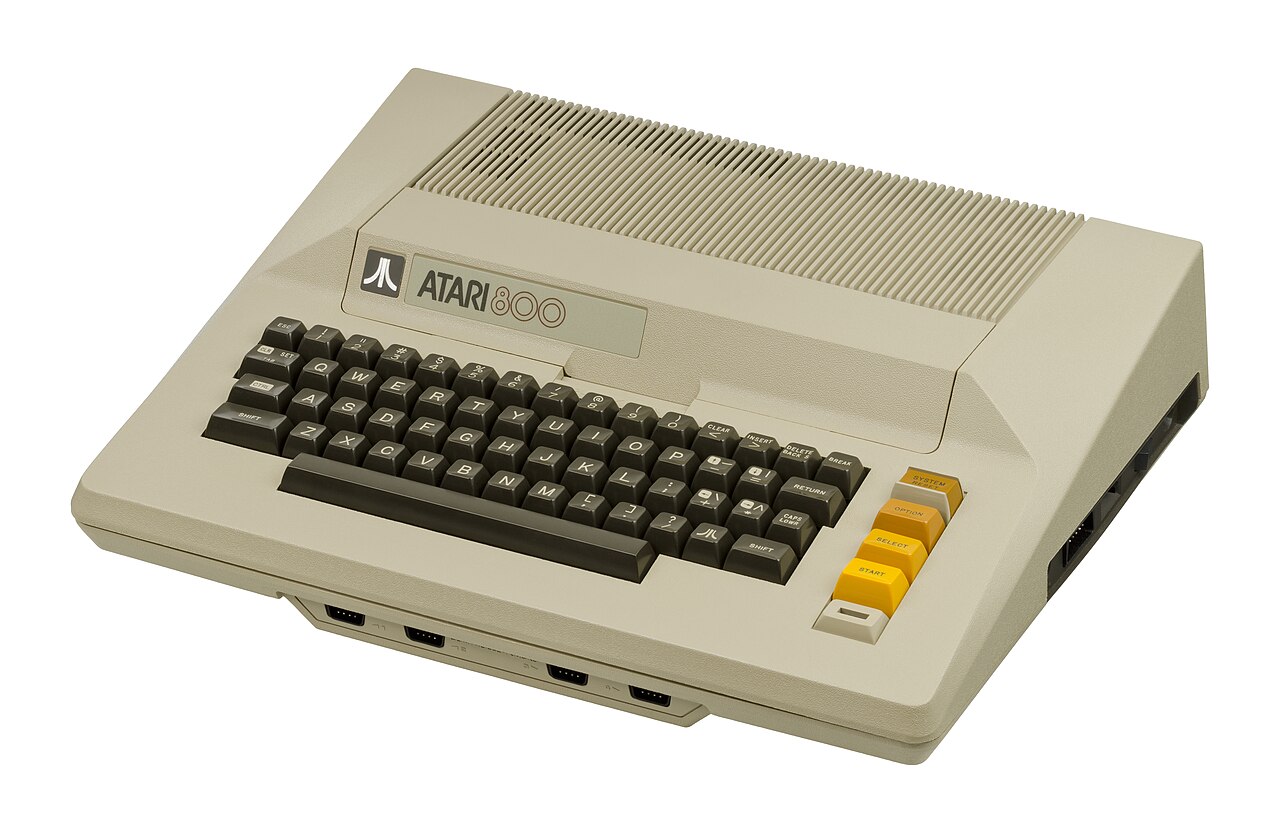
The Atari 800, launched 1979. (Photo: Evan-Amos, public domain)
Robert J. Brown co-founds Starpath (originally Arcadia), building cassette-based games for the Atari VCS via its Supercharger add-on — including Phaser Patrol and Communist Mutants from Space.
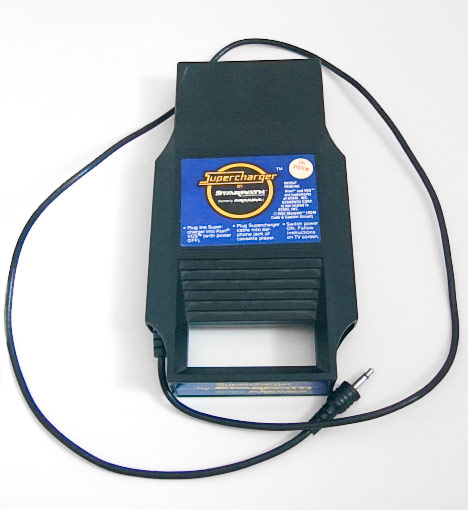
The Starpath Supercharger. (Wikimedia Commons, public domain)
The North American video game crash devastates the industry. Atari, reeling from the Pac-Man and E.T. missteps, secretly buries truckloads of unsold cartridges in a landfill in Alamogordo, New Mexico. In 1984, Warner splits the company and sells the consumer division to Jack Tramiel, ending the Atari, Inc. that built the Video Music.

Cartridges from the 1983 Alamogordo burial, unearthed in the famous 2014 excavation. (Photo: Taylor Hatmaker, CC BY 2.0)
The X-Files episode "Ghost in the Machine" (Season 1, Episode 7) features Video Music-style visuals as part of a surveillance system.
The hypnotic diamonds that kept turning up on screen.
US Patent 4,081,829 expires — seventeen years after its March 1978 grant — and the Video Music's design passes into the public domain. From this point on, anyone may freely study, build, or clone the circuit, opening the door to the DIY recreations and homebrew visualizers that keep the design alive today.
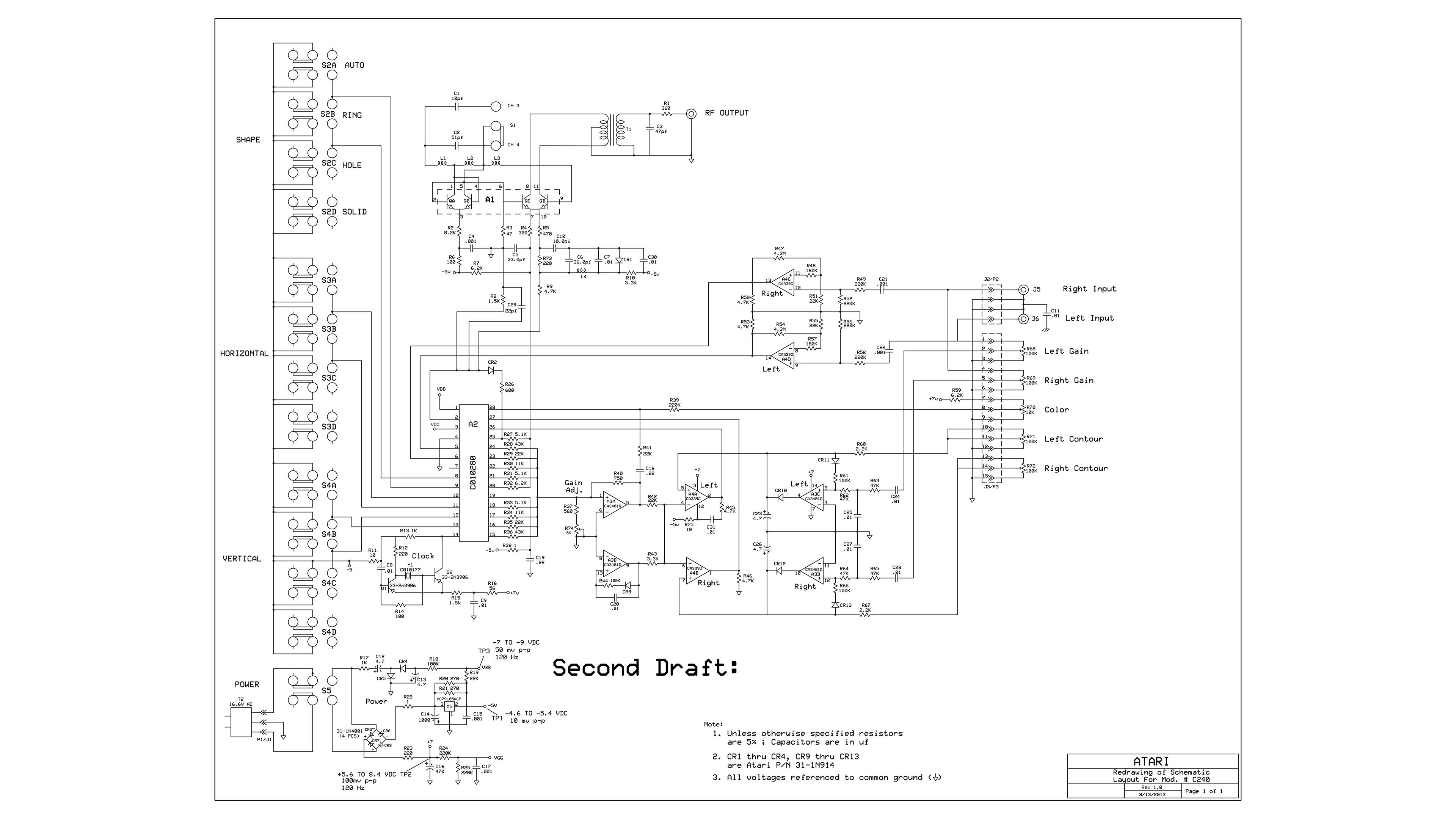
The C-240 circuit — free for anyone to build since 1995.
Daft Punk's "Robot Rock" video puts a C-240 back in front of millions of viewers.
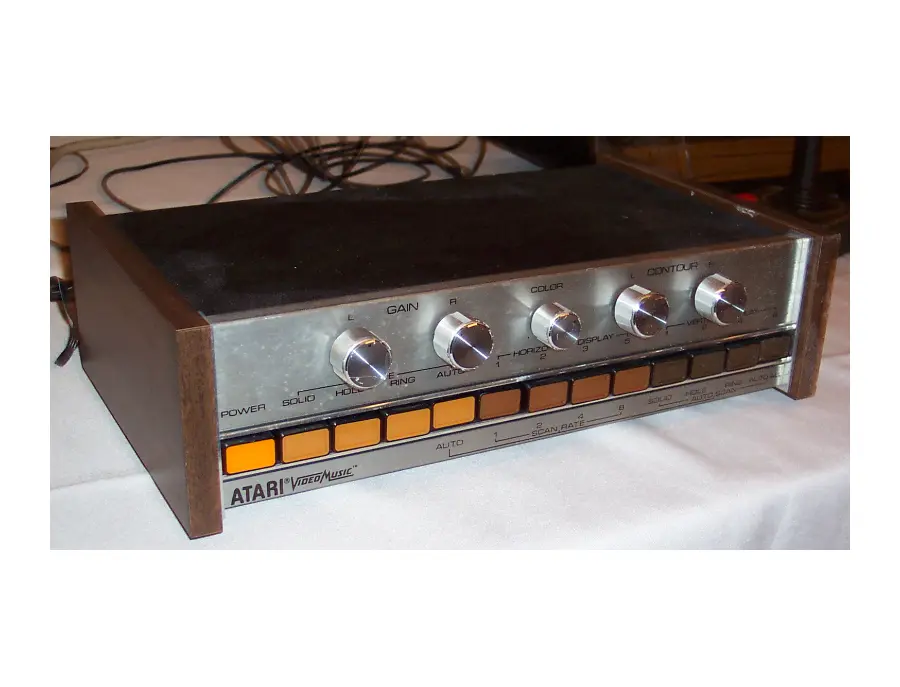
The C-240: never entirely forgotten.
The Alamogordo landfill is excavated on camera for the documentary Atari: Game Over, confirming the legendary burial and turning Atari's lowest moment into preservation history.
The 2014 dig at Alamogordo, New Mexico. (Photo: Taylor Hatmaker, CC BY 2.0)
Collectors restore, recap, and modify surviving units. With the patent long in the public domain, hobbyists build faithful recreations. AtariVideoMusic.net documents and preserves the machine's history — and streams it live.
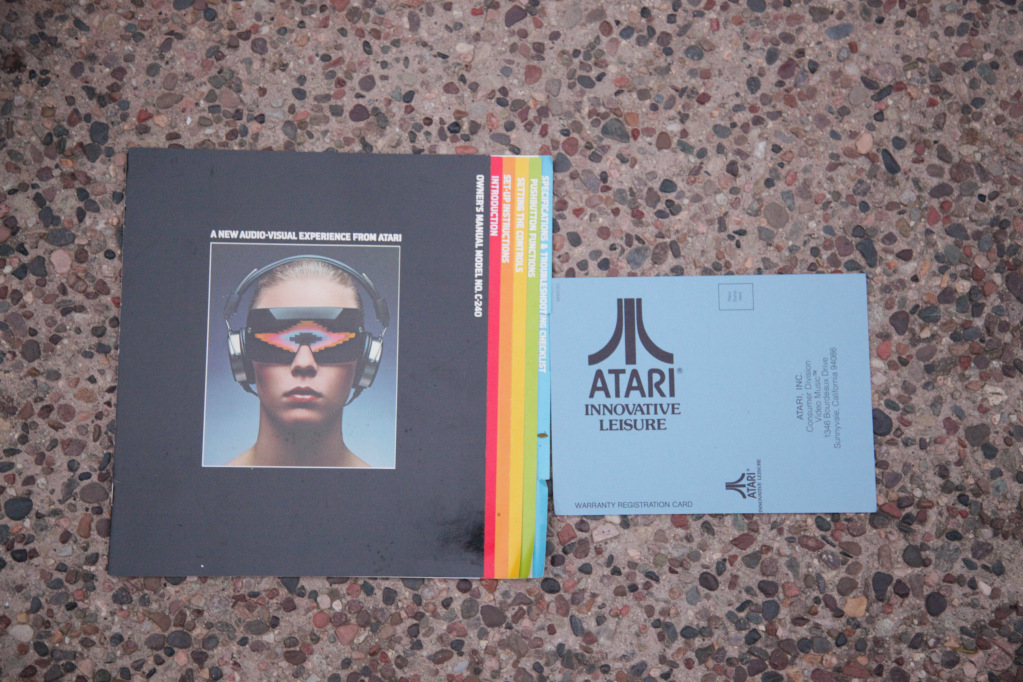
A surviving complete-in-box C-240.